Home / Alumni News / Maestro of the Heart
Maestro of the Heart
Inspired by opera, Walter A. Edmiston, ’71 MD, FACC, has made a career of people-centered cardiology.
By Amanda Dee
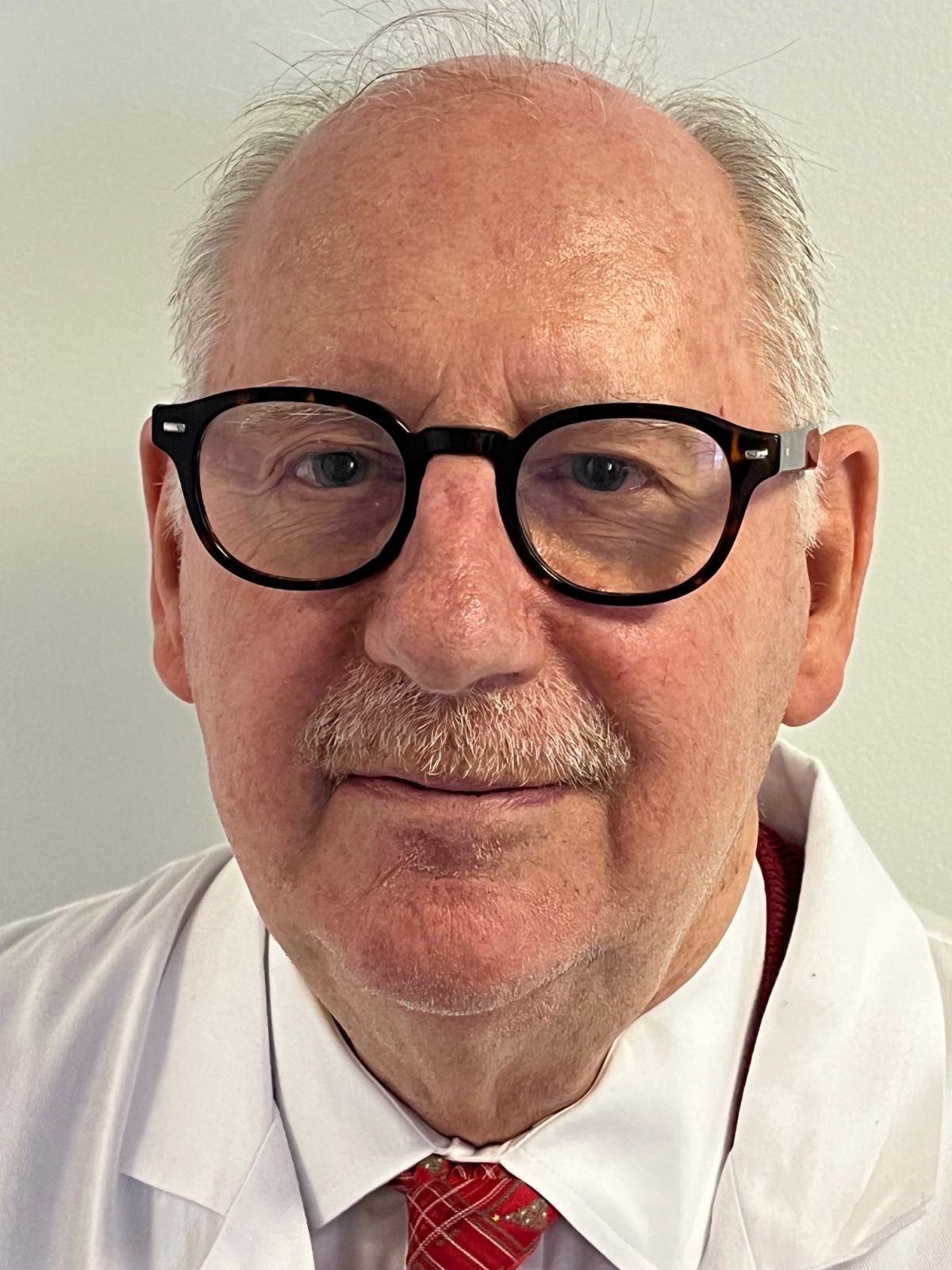
For more than 20 years, Walter A. Edmiston, ’71 MD, FACC, has fused his passions for music and medicine through his role as consulting physician for the Los Angeles Opera. But for Edmiston, opera has always gone hand in hand with medicine.
“Opera is emotion, it’s compassion, it’s empathy,” he said. “If you absorb the music and the text, everything you need to know to be a better doctor, you can learn from the opera.”
As an undergraduate student at Northwestern University, Edmiston originally had his sights set on a career as a pianist. When he instead decided to apply to medical school, his exposure to medicine was limited to an emergency room visit for a sprained ankle and Christmas caroling for hospital patients. No one else in his family was a physician.
As fate would have it, Edmiston’s decision came in 1968, when medical technology was rapidly advancing. Northwestern University Feinberg School of Medicine responded with a renewed interest in humanism. The director of admissions appreciated not only Edmiston’s MCAT scores but his musical background. “That was the idea,” Edmiston explained, “to become a better, more empathetic physician, not just a scientist.”
Edmiston’s connection with people has driven his career since his first day of medical training. At Feinberg, he was immediately drawn to the camaraderie between students, whether he was in labs or lecture halls or in rotation at the Westside VA Hospital (now known as the Jesse Brown VA Medical Center). He could even rely on his peers to take notes for him when he skipped a lecture to buy tickets to the famed pianist Vladimir Horowicz at Chicago’s Symphony Center. During a summer fellowship in tropical medicine, for a week at a time, he would share a boat that slept about eight people to set up health clinics in small villages in the Philippines.
Opera is emotion, it’s compassion, it’s empathy. If you absorb the music and the text, everything you need to know to be a better doctor, you can learn from the opera.
Walter A. Edmiston, ’71 MD, FACC
After graduating from Feinberg in 1971, he drove his red Chevy Vega to California for residency in internal medicine at the former LA-USC Medical Center (now called the Los Angeles General Medical Center). He specialized in cardiology because of the bond he’d formed with mentors in that division. “I hit with them in cardiology, and they hit with me,” he said, adding that he also chose cardiology because it’s very clean. “We look at papers, we look at blood, but no other body fluids.”
As a fellow in the mid-70s, he was also involved in a landmark clinical trial on cholesterol and heart disease. Before there was effective medication to lower cholesterol, the Program on the Surgical Control of the Hyperlipidemias (POSCH) was the first study to prove that lowering cholesterol reduced the development of atherosclerosis. The trial spanned institutions across the country, including the University of Southern California (USC), University of Minnesota, University of Pennsylvania, and University of Arkansas. Again, Edmiston celebrated the camaraderie involved in this work.
Edmiston took on a number of leadership roles at USC once he completed his internship. He taught students and trainees as an associate clinical professor of cardiology. He led the cardiac catheterization laboratory in addition to directing clinical cardiology at the medical center.
Edmiston’s leadership has also extended to communities beyond USC. He served as president of the Greater Los Angeles chapter of the American Heart Association, which additionally recognized him for his achievements and volunteer work. He directed cardiology at Huntington Memorial Hospital in Pasadena, California. And of course, he’s on the board of the LA Opera, for whom he’s organized a community seminar series and given lectures himself.
When asked how opera directly translates to medical training, Edmiston said he has always tried to teach trainees what he’s learned from opera by example: through his bedside manner and his efforts to understand the whole patient. Above all, he’s taken the director of admissions philosophy to heart.
“Studying for the test is important, but you have to be well-rounded,” Edminston said. “You have to have other interests. That makes you a better doctor.”
It’s not hard to imagine why his one daughter Marissa Edmiston, MD, followed his path to Northwestern, graduating from the Northwestern University Weinberg College of Arts and Sciences, and then on to cardiology.
Now semi-retired and living in Pasadena with his partner, Edmiston finds time a few days a week to see patients at Huntington Memorial, and he always finds time to play the piano.