Advancing Survivorship, Strengthening Pediatrics
More than 80 percent of childhood cancers are curable, but survivors face a high risk of secondary cancers as adults. Tara Henderson, MD, MPH, investigates the long-term effects of treatment while aiming to find safer cures.
By Christina Frank
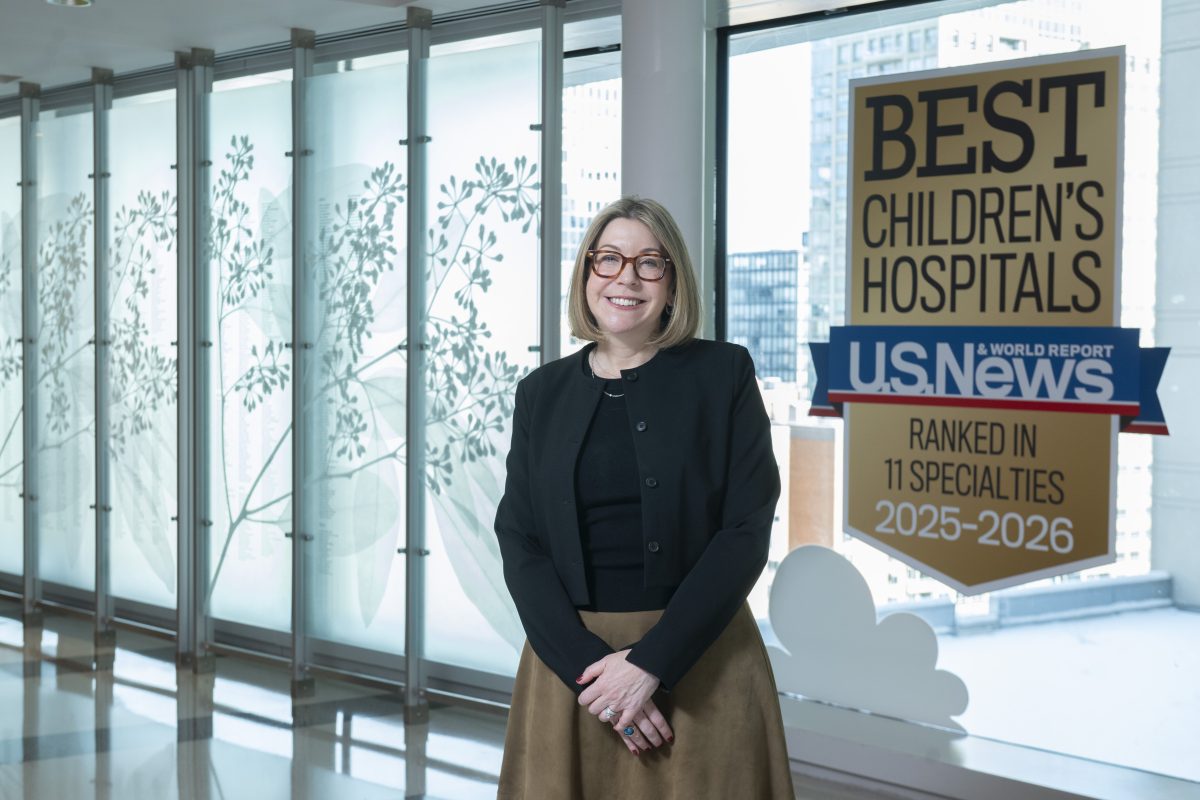
Tara Henderson, MD, MPH, the new Founder’s Board Chair of Pediatrics at Ann & Robert H. Lurie Children’s Hospital of Chicago and Northwestern University Feinberg School of Medicine, knew she wanted a career in oncology early on in her studies at the Pritzker School of Medicine at the University of Chicago. Her pediatric rotation proved pivotal; while caring for a little girl with a rare blood cancer, she realized pediatric oncology was the specialty she wanted to pursue.
“I knew I wanted to do oncology, but being a pediatrician wasn’t really on my radar until my third year of medical school,” Henderson said. “I was doing my pediatrics rotation, which every third-year student has to do, and I asked the clerkship director if, instead of doing general inpatient pediatrics, I could do pediatric oncology.”
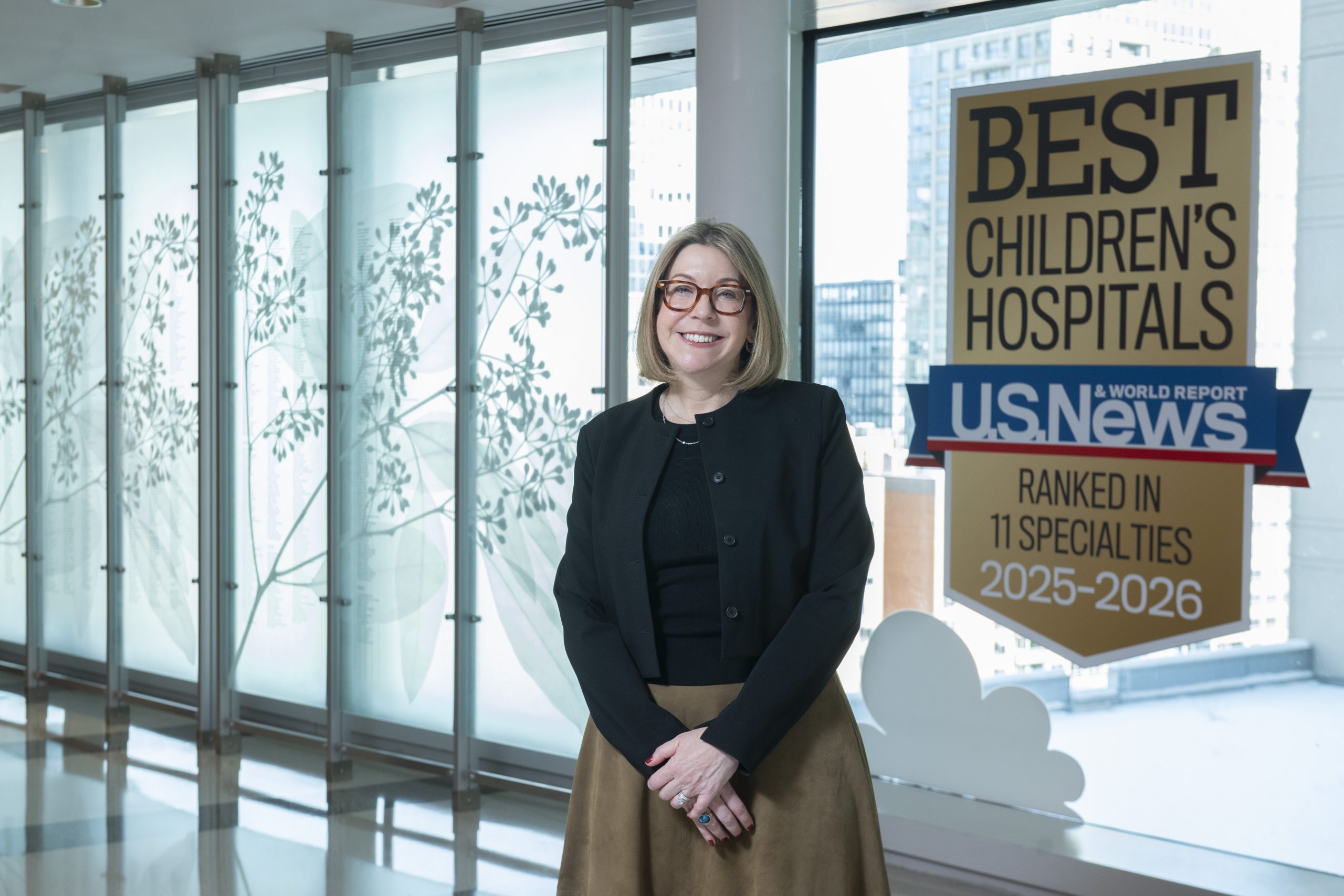
Henderson was named the Founder’s Board Chair of Pediatrics in March 2025. Previously, she was the Arthur and Marian Edelstein Professor of Pediatrics at the University of Chicago and director of the Childhood, Adolescent, and Young Adult Survivorship Center at UChicago Medicine. McKenna, the 4-year-old girl Henderson took care of during her third year, had acute promyelocytic leukemia and was awaiting a stem cell transplant. Henderson says caring for and getting to know McKenna and her family over the course of the month was “transformative.”
“People comment on how hard it must be to care for kids with cancer, and ask how I can do it,” she said. “Number one: we’ve cured 85 percent of kids with cancer. That is one of the most spectacular triumphs of medicine. It’s just extraordinary. And when a child is treated for cancer, you get to see the most beautiful side of humanity. The caregivers, the community — there’s an outpouring of good. You see these parents and the strength they have. It’s remarkable. It’s a privilege to take care of families and kids with cancer.”
Henderson, who grew up in Watchung, New Jersey, had expected to go to New York for her pediatrics residency, but ultimately decided to pursue her training at Johns Hopkins School of Medicine in Baltimore. “I was attracted to how they did their didactic learning and their focus on really understanding disease and taking care of the sickest children and the children in the inner city,” Henderson said.
NO LOOKING BACK
Henderson’s interests evolved again in 2003, during her oncology-hematology fellowship at the Dana-Farber/Boston Children’s Cancer and Blood Disorders Center in Boston. She had narrowed her research interests to palliative care and ethics in the pediatric population until she was assigned a faculty mentor who had started the cancer survivorship program at Dana-Farber. “I became very interested in understanding cancer risk through understanding subsequent malignancy after a primary cancer,” Henderson said.
From there, she never looked back. She has published more than 100 peer-reviewed research articles on cancer survivorship with funding from the National Institutes of Health. At the University of Chicago, Henderson established one of the preeminent academic childhood, adolescent, and young adult survivorship programs in the nation.
“We’ve learned over the last five decades that we can cure, but there’s a cost. We need people to understand these outcomes,” Henderson said. “It’s critical to take care of the survivors to help us think about the best way to cure.”
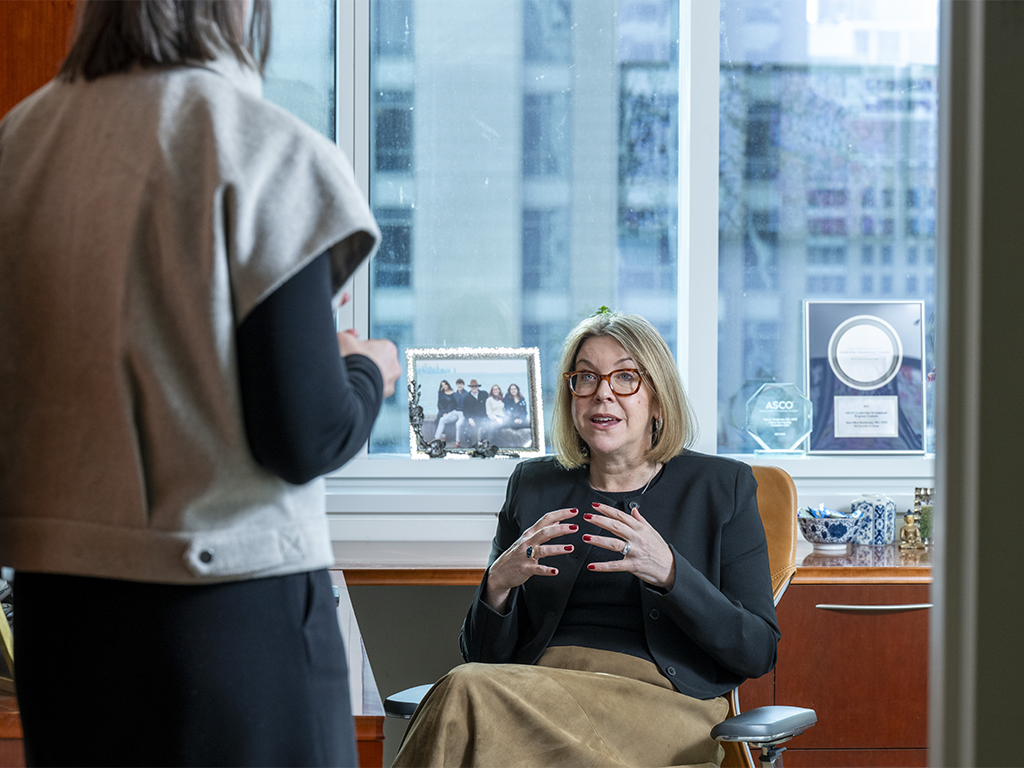
Patients who have survived childhood or young adult cancer are at risk for a host of secondary cancers, largely due to the long-term toxic effects of radiation and chemotherapy used to cure the primary cancer. Most of Henderson’s work focuses on the risks of breast cancer and colorectal cancer in survivors.
“Breast cancer risk has been driven in huge part by radiation therapy,” Henderson said. “Women who received radiation treatment that involved the chest at a young age have a risk of breast cancer that’s higher than women who carry a BRCA1 or BRCA2 mutation.” To put that in perspective, the risk of developing breast cancer is estimated to range from 45 to 85 percent for women carrying those mutations.
Survivors of Hodgkin lymphoma, one of the most common adolescent and young adult cancers, are especially at risk, as, historically, about two-thirds of these patients have received radiation for large chest masses. Henderson is working on how to tailor radiation therapy to keep it effective but less toxic; she has also been instrumental in developing specific screening breast cancer guidelines for women exposed to chest radiation. For a subpopulation of women survivors who developed breast cancer but did not have radiation, the risk factor seems to be prior treatment with a class of chemotherapy drugs called anthracyclines.
Colorectal cancer is common among survivors who received radiation to the abdominal and pelvic area as young people; again, chemotherapies may also play a role. Currently, Henderson is leading an international study looking at colorectal cancer in adults who were treated for cancer when they were younger. Investigators are finding that colorectal cancer in survivors is occurring at an extremely young age. “The average age for a colorectal cancer diagnosis is around 60,” Henderson said. “We’re seeing that half of the patients are developing colorectal cancer before the age of 40, and 20 percent are getting it before they’re 30.”
ENSURING A STRONG PIPELINE
As chair, Henderson plans to build on the hospital’s existing STAR (Survivors Taking Action & Responsibility) Program for Childhood Cancer Survivors, raising its stature even higher. She is eager to partner with the Feinberg School of Medicine and with Northwestern University to encourage pre-med and medical students to consider pediatrics. “Pediatrics is at a crossroads right now for a multitude of reasons,” Henderson noted, citing factors such as the declining birth rate in the United States and lower insurance reimbursements for pediatrics.
“We’ve had fewer people nationally going into the field, and there’s a work shortage in some of our specialties,” she said. “We have such an unbelievable dean of medical education in Dr. Marianne Green. I’m excited to partner with her to keep that pipeline strong and keep people going into pediatrics and all the different subspecialties.” Henderson also finds interacting with physicians and other experts outside of her own specialty to be invaluable. In 2014 and 2015, she participated in the American Society of Clinical Oncology’s Leadership Development Program as one of 12 oncology subspecialists.
“It was meaningful to learn from people outside the field of pediatric oncology,” Henderson said. “When you interact with people outside of your own lane, you both think about your own problem better, and you can bring your ideas to solve totally different problems. The opportunity to be chair gets to my desire to broaden people and what they know and just spread the joy about how much I love what I do to the rest of this organization. I think that if you have a true love of what you do, it just drives you every day to do more.”
Henderson’s expansive vision for pediatrics, cancer survivorship, and collaboration with other experts and departments extends to her ambitions for the hospital itself. An overarching goal of hers, she noted, is to help Lurie Children’s Hospital become one of the top five children’s hospitals in the country. “It’s already an unbelievable, thriving hospital, so I think we’re not very far from getting there.”
Photo credit: Gr8y Productions