Home / Alumni News / Breaking Down Blood Cancers
Breaking Down Blood Cancers
Sandeep Dave, ’95 MS, ’99 MD, ’00 MBA, developed a test to speed cancer diagnosis and launched an international consortium working to accelerate blood cancer research.
By Bridget Kuehn
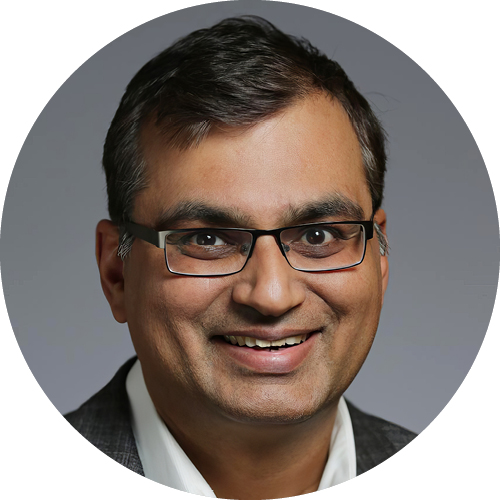
Like many oncologists, Sandeep Dave, ’95 MS, ’99 MD, ’00 MBA, the Wellcome Clinical Distinguished Professor of Medicine at the Duke University School of Medicine and director of the Molecular Genetics and Genomics Program at the Duke Cancer Institute, often feels impatient waiting for a diagnosis for his patients’ cancers. He explained that many cancer patients referred to academic centers for therapy are eager to begin treatment quickly, but they often wait a week or sometimes weeks for biopsy collection and analysis.
“Waiting is agony for the patients and their families, and it is equally uncomfortable for treating oncologists who cannot begin treatment until the diagnosis is nailed down,” Dave said. “I’d often have this impulse—which I would suppress—to take the patient’s biopsy to my research lab to use genomics to recapitulate the diagnostic workup.”
The instinct led him to develop a genomics-based cancer diagnostic tool for patient use. To create the clinical test, he spun off a start-up called Data-Driven Bioscience (ddb.bio), now called Duoseq, to provide DNA and RNA sequencing of patient samples within 48 hours. Dave has also applied his genomics skills and technology to launch the Atlas of Blood Cancer Genomes, an international consortium systematically mapping the genomes of more than 100 types of blood cancers to help accelerate the pace of research and therapeutic progress in the field of hematology-oncology.
“We hope the atlas provides a comprehensive map of different treatment possibilities as well as diagnostic markers for all of the individual blood cancers,” Dave explained. “It also provides a baseline for understanding how patients are likely to respond to existing therapies.
Building Blocks
Dave initially started a bioengineering PhD program at Northwestern University but decided to pivot to Northwestern’s combined MD/MBA program after completing his master’s degree in bioengineering. Looking back, Dave noted that his diverse training paid off: the engineering program provided research methodology training, his MD provided the clinical backbone, and the MBA provided a grounding in the business world, even though he wasn’t sure at the time.
“At the time, none of it seemed like it was going to lead to any place coherent,” Dave said. “But as you live life and do the work, you find that you’re drawing upon all aspects of your past work that are relevant to this day.”
But his time at Northwestern, including his residency, gave him the time and space to explore his interests before he settled on oncology as a career. He explained that seeing the first targeted cancer therapies developed and watching the success of targeted HIV therapies in turning the tide on the HIV epidemic inspired him to pursue oncology.
“I could envision a time where cancer would also become like HIV, where it would go from being a death sentence to something one can manage by taking several different medications designed to arrest the growth of the tumor,” he said.
Oncology also felt like a field where his research could have the greatest impact by delivering therapies that have an enormous effect on patients’ lives. During his fellowship in hematology-oncology at the National Institutes of Health (NIH), he witnessed the birth of the genomic revolution, with his tenure overlapping with the completion of the Human Genome Project. That led to some high-profile publications in the New England Journal of Medicine and Cell on genomics, diagnostics, and prognostics in blood cancer. Dave left NIH in 2007 to join the new Duke Institute for Genome Sciences and Policy and establish his own laboratory.
“I was in the right place at the right time,” Dave said. “At NIH, we were able to develop genomics tools to help automate the diagnosis of complicated diseases like Burkitt Lymphoma. We were also able to unravel what the different building blocks are for different blood cancers.”
Roadmap for Progress
Those building blocks proved to be the key to the technology Dave would later develop to deliver faster diagnoses to cancer patients. But to bring his idea to market, he first had to raise venture capital, hire a team with the skills to develop a clinical testing platform, and then spend several more years of development before patient testing could begin. The test his team developed can replace 10 to 15 different tumor diagnostic tests that would take weeks to complete.
“It is almost 10 times faster, and it can be significantly cheaper because you have a single workflow that replaces many other workflows.It can also provide more detailed results than conventional testing approaches and a faster turnaround, which have both fueled its popularity with oncologists,” Dave said.
Several hospitals are already using the test, and in the company’s first year, it has reported results for about 2,000 patient samples. “We hope that trajectory will continue to grow fast,” he said.
I could envision a time where cancer would also become like HIV, where it would go from being a death sentence to something one can manage by taking several different medications designed to arrest the growth of the tumor.
Sandeep Dave, ’95 MS, ’99 MD, ’00 MBA
In addition to serving as the CEO of the company, Dave continues to direct the Molecular Genetics and Genomics Program at the Duke Cancer Institute. His laboratory focuses on developing new diagnostics and treatments for leukemias and lymphomas. In 2000, Dave started a global consortium composed of research teams from 25 leading academic institutions worldwide, including Northwestern, Harvard, Stanford, Duke, and Vanderbilt. The goal of the Atlas of Blood Cancer Genomes is to help expedite the development of new therapies for blood cancers.
“The whole ad hoc approach of studying one blood cancer at a time was resulting in very slow progress because it would take a couple of years to conduct a study on one blood cancer, then you’d move on to the next one,” he explained. “At that rate, we’d barely scratch the surface of this entire group of diseases. So, I proposed we systematically study all blood cancers.”
At first, the goal of studying a hundred different blood cancer types by enrolling at least 100 patients with each type and collecting, testing, and running diagnostics on tumors from this cohort of 10,000 patients seemed daunting. But by working together, the consortium has overcome the challenges of patient enrollment, tissue collection, and diagnosis in this massive project. In fact, the team has now collected about 15,000 tumor samples from patients. That massive data set is helping to advance therapies even for the rarest blood cancer types, like hepatosplenic lymphoma.
“Some of these tumor types are very rare, and there is almost no hope of doing a clinical trial when you barely have 100 patients diagnosed nationwide,” Dave explained. “But if you can see what characteristics this tumor shares with other more common tumor types, maybe you can apply therapies developed for more common tumor types and with the hopes of shifting outcomes.”
The consortium is also using artificial intelligence-based approaches to identify new therapies and improve diagnostics using their data.
“There are a lot of applications for data at that scale that took us many years to generate, but we are at the point where we can reap the benefits of it,” Dave said.
To Dave, working on the atlas project has been both professionally and personally fulfilling.
“I have been able to travel widely throughout the world on virtually every continent,” he said. “That led to a nice nexus between the professional work we do and the personal. It led to a lot of friendships and close personal connections that I cannot imagine my life without.”