
Home / History Blog / Ward Rounds | 1966 | Kenneth M. Viste, Jr., MD
Ward Rounds | 1966 | Kenneth M. Viste, Jr., MD
Dedicated to Making the Study of Medicine and Accessibility of Healthcare Available to All
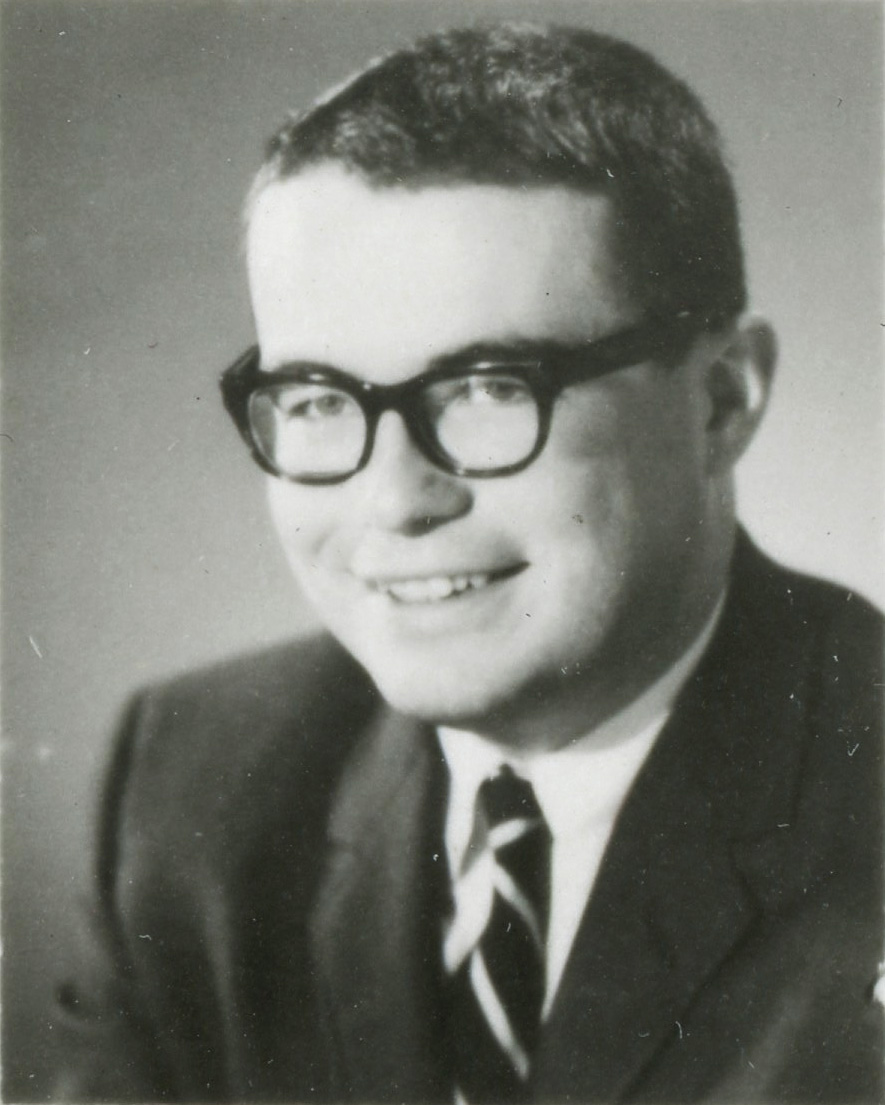
Kenneth M. Viste, Jr., was born on December 17, 1941, in Elkhorn, a small town southwest of Milwaukee, Wisconsin. He grew up on a farm in rural Wisconsin and was the son of a public school teacher and a school administrator. In September 1955, at age 13, Viste contracted polio—mass vaccination had only begun in April of that year. It left him paralyzed and in a wheelchair for the rest of his life. The next year, while recovering in a hospital in Madison, Wisconsin, a bored Viste decided to visit the governor, so he wheeled himself three miles down the road to Governor Walter J. Kohler, Jr.’s office at the State Capitol. He didn’t leave until he spoke to the governor, which he did for 45 minutes. This foreshadowed a life characterized by determination and dedication to the causes he cared about.
Viste attended the University of Illinois, where he nurtured his interest in law and politics. However, part way through his studies, Viste chose to pursue his other interest—medicine, and specifically neurology, which he thought would be the best way for him to help others. So, after earning a bachelor of science degree in zoology in 1962, Viste enrolled at Northwestern University Medical School (NUMS), the predecessor of Feinberg School of Medicine. He continued his advocacy during medical school, and while at Feinberg, he organized the residents to talk to the administration about patient care and working conditions. In 1966, Viste earned his medical degree and completed an internship at Wesley Hospital (now Northwestern Memorial Hospital) as well as a National Institutes of Health fellowship in neurology at NUMS.
After running a private neurology practice in Chicago for four years, Viste returned to Wisconsin and began a long career in medicine and advocacy, focusing on neurological rehabilitation and making healthcare affordable and accessible, especially for the elderly and those in rural areas. Many who knew and worked with him commented on his energy and dedication to these causes. As one article put it, he was involved in enough activities “to keep half a dozen health professionals indefinitely occupied.” In the 1970s alone, he opened a private practice, incorporated the Fox Valley Neurological Association, directed a multiple sclerosis clinic and neurological rehabilitation units at multiple local hospitals, became a clinical assistant professor of neurology at the University of Wisconsin Medical School (rising to clinical professor in 1993), was elected president of the Wisconsin Neurologic Society, and travelled to Europe on a goodwill tour with other Wisconsin doctors.
While maintaining his medical work, Viste’s advocacy work took on new dimensions in the 1980s and ‘90s, on both the local and national levels. In 1987, he founded PartnerCare, a program dedicated to providing healthcare to elderly people who couldn’t otherwise afford it. The American Medical Association (AMA) recognized it as one of the top four health programs in the country that year, and in 1988, elected him to its Council on Legislation, which addressed federal legislation and AMA policies. Viste was also heavily involved in the State Medical Society of Wisconsin, the American Academy of Neurology, and the American Society of Neurorehabilitation, serving as president of each organization. As president of the Wisconsin Medical Society, he logged 20,000 miles of travel to clinics around the state where he advocated for accessible and affordable healthcare, including his PartnerCare program and Medicare reform. Reflecting this prominence, in 1994, he was one of 10 physicians appointed by the Secretary of Health and Human Services to the Practicing Physicians Advisory Council, which advised the Secretary on Medicare policy.
Kenneth Viste died of advanced gallbladder cancer at the Mayo Clinic in Rochester, Minnesota, on August 21, 2005, at age 63. Earlier in life, Viste was quoted as telling medical students: “Medicine is the most challenging, exciting profession there is, one by which you can help people, leave a mark, use your knowledge, and be personally satisfied.” Reflecting the mark that he left on the profession, multiple organizations continue to give awards in Viste’s honor, including the American Academy of Neurology, the American Society of Neurorehabilitation, the Wisconsin Medical Society, and Feinberg.
Emma Florio is the special collections library assistant at the Galter Health Sciences Library and Learning Center. Learn more and read the full article.