Meeting Patients Close to Home
The opening of the Bronzeville Outpatient Center makes world-class healthcare more accessible.
By Brooke Morris-Chott
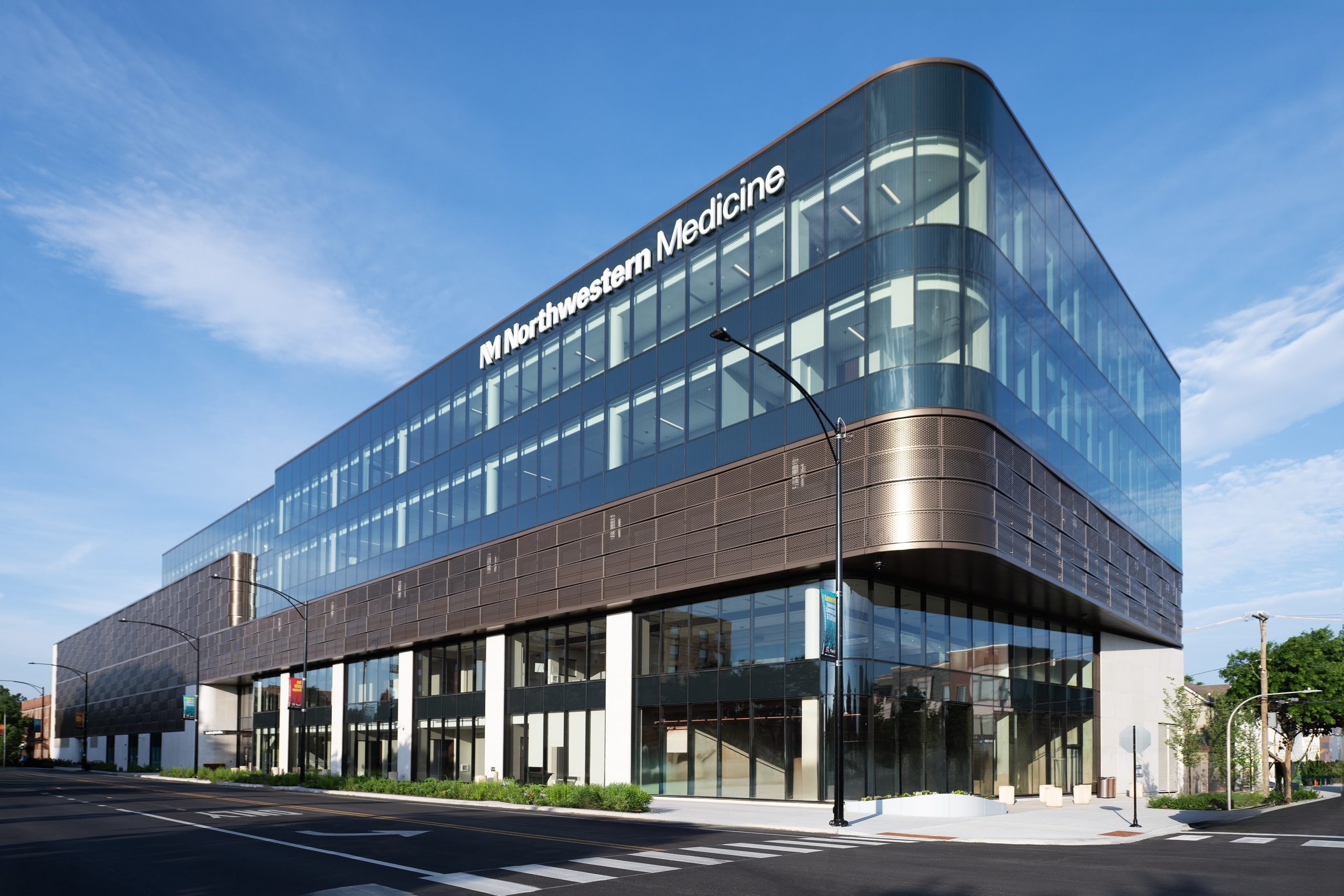
On a chilly day in early September 2025, 126 residents of Bronzeville and nearby communities were the first patients to walk through the doors of Northwestern Medicine Bronzeville Outpatient Center, located on the South Side of Chicago.
Due to its location and long-standing ties to Northwestern Medicine, Bronzeville was the ideal neighborhood for the 120,000-square-foot outpatient center that offers care in more than 14 specialties. “Northwestern Medicine has had a long-term relationship with various organizations on the South Side of Chicago, spanning 20 years,” said Kimbra Bell, MD, clinical assistant professor of Medicine and medical director of the center. According to Bell, this history of collaboration with the Bronzeville community helped bring the center to fruition.
“This is our first brick and mortar on the South Side,” Bell noted. “And with the collaboration with local organizations that share our vision, we’ve made the center a reality.”
The Bronzeville neighborhood is currently experiencing a revival as it works to preserve its rich heritage. Bronzeville is one of Chicago’s historical gems, serving as the center of Black history on the South Side. The community was the cultural center for Black people during the Great Migration in the early 1900s. Residents of Bronzeville created their own self-sufficient community, establishing a vibrant mecca for Black artists, musicians, and entrepreneurs, as well as Black intellectuals and politicians, during the early 20th century. As the community grew, it became home to some of the most influential Black figures, including Gwendolyn Brooks, Richard Wright, Louis Armstrong, Bessie Coleman, Ida B. Wells, and Andrew Foster.
Bell was appointed medical director in October 2021 when the planning of the center was still in its infancy. “One of the very first things that I was charged with doing was designing the clinical program and its offerings,” Bell said. “In looking at the stats of Bronzeville and surrounding neighborhoods, as well as what services Bronzeville residents were seeking at the main campus of Northwestern Medicine in Streeterville, we were able to determine what services were needed.”
Bell and the center’s leadership team also relied heavily on feedback from the Bronzeville community. They conducted meetings, held vision and listening sessions with community members, and worked closely with the alderperson representing Bronzeville at the time. “As a partner, it was really important to us that we hear from the community — what they thought, what they were interested in seeing. And as a result of this, we actually ended up increasing our footprint, going from 80,000 square feet to 120,000 square feet,” Bell said.
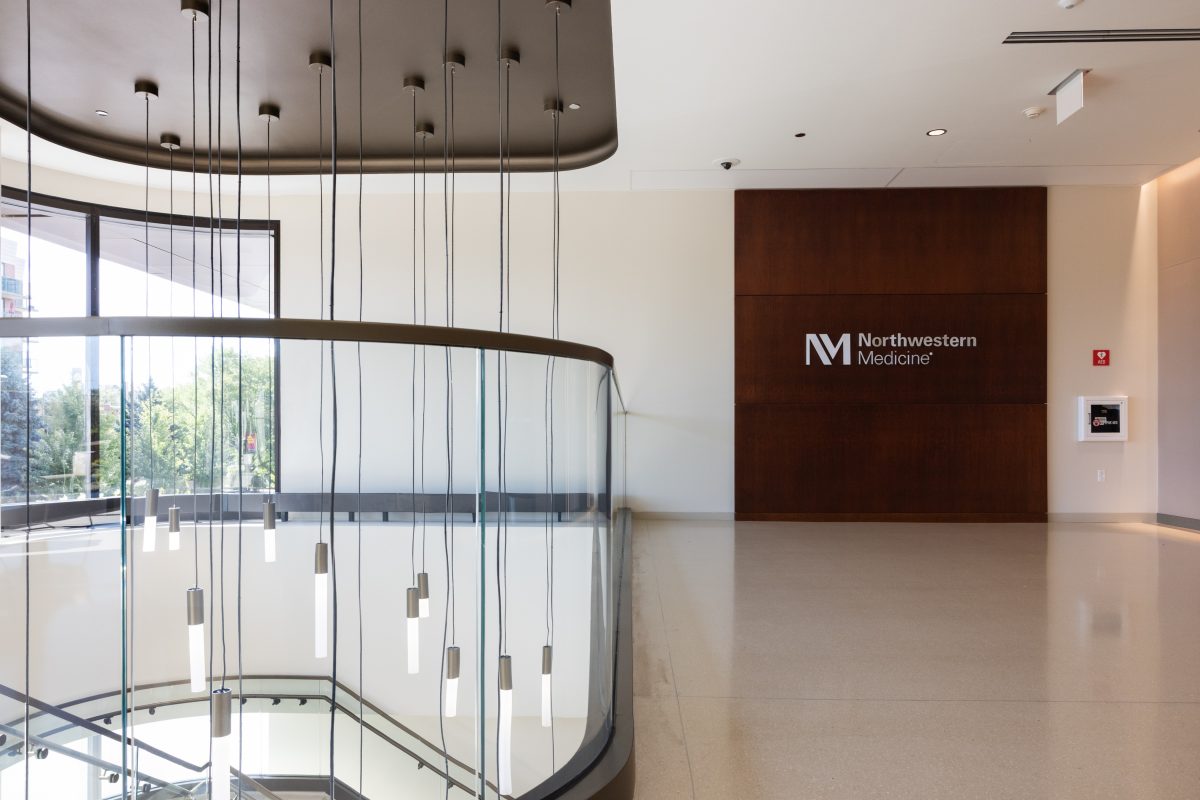
Specifically, Bell pointed out, the center added a pediatrics group because community members expressed a strong desire to have a space for children’s healthcare. Another significant addition was the inclusion of a meeting space for residents where they could engage in activities such as book club meetings and other community gatherings. This evolved into a 7,500-square-foot community space that includes a teaching kitchen for cooking demonstrations, which Bell is most excited about. “With the teaching kitchen, we will offer cooking demonstrations on how to prepare healthy meals for various chronic health conditions such as diabetes, chronic kidney disease, and cardiovascular disease,” Bell said.
In addition to listening to the preferences of Bronzeville community members, Bell and the center’s leadership team considered the healthcare needs of South Side residents when identifying specialties for the center. For instance, Bell felt that endocrinology and nephrology were must-have offerings in Bronzeville, given the prevalence of diabetes and chronic kidney disease. Mental health was another area of practice that was high on Bell’s priority list. “Historically, when it comes to mental health, many Black Americans do not seek out mental healthcare largely due to the stigma associated with it,” Bell explained. “This is why having that mental health component is so very important to the center and this community.”
The center is expected to serve more than 50,000 patients and family members from Bronzeville and nearby communities every year and will employ a workforce of more than 110 new employees. It currently provides clinical and community services that include primary and specialty care, immediate care, chemotherapy and infusion services for cancer treatment, imaging and diagnostic services (MRI, CT, ultrasound, X-ray, bone density scans, and mammography), mental health services, pediatrics, cardiology, women’s health, dermatology, physical therapy, pulmonology, gastroenterology, and ophthalmology, as well as a vision center and an optical shop. In addition to the multipurpose and event space for community gatherings and the teaching kitchen, the center has room for fitness classes and green space on its rooftop. It will also house the newest location of Migos Fine Foods – a restaurant based in the Portage Park neighborhood of the city that serves up a blend of New Orleans soul food and Algerian cuisine – which will be open to the public.
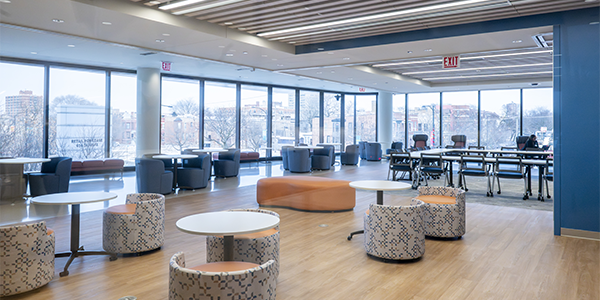
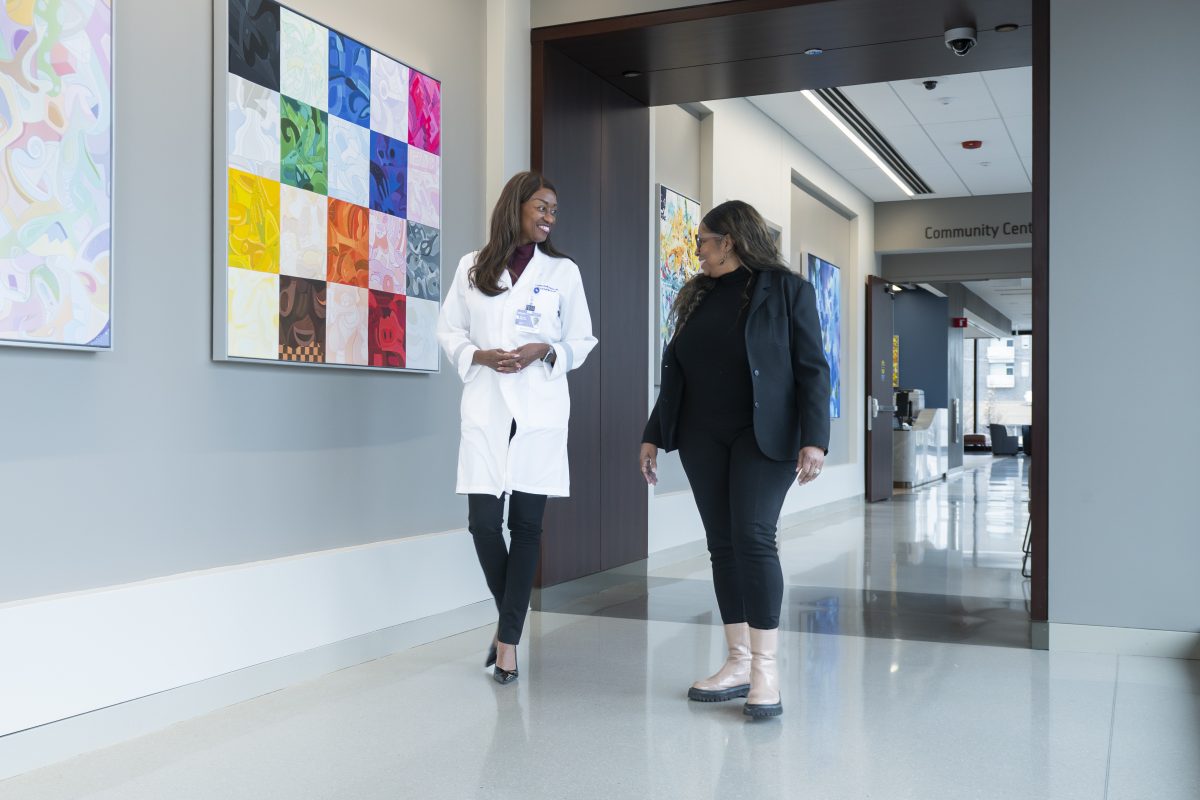
The specialties, services, building size, and location aren’t the only elements of the center that were deliberate – even the furniture used in the space was carefully chosen. “From the feedback we received from the community regarding the look and design of the building, we noticed that some of the themes that kept coming up revolved around safety and feeling safe,” Bell said. “Some of the furniture, like the curved chairs that make you feel like you’re getting a hug and the patient rooms that are set up so that patients don’t feel so exposed, are designed to be warm and inviting. It’s comfort. It’s privacy. It’s a feeling of safety.”
The opening of Bronzeville Outpatient Center marks a historic step for Northwestern Medicine, which is committed to helping build stronger, healthier communities and expanding access to exceptional healthcare throughout Chicago. And with its potential to make a generational impact on the health and wellness of area residents, it also marks another milestone in the neighborhood’s history.
“Bronzeville is a place with a very rich history; a place that deserves and needs to have what this center is offering – worldclass healthcare right in the neighborhood,” Bell remarked. “And I would love to see just how we can really change health outcomes by removing barriers to quality care.”
Take a virtual tour of Bronzeville Outpatient Center.