Home / Alumni News / From Models to Mastery
From Models to Mastery
Northwestern Simulation executive medical director Jeffrey H. Barsuk, ’99 MD, ’02 GME, ’10 MS, is improving patient outcomes using state-of-the-art medical simulation.
By Bridget Kuehn
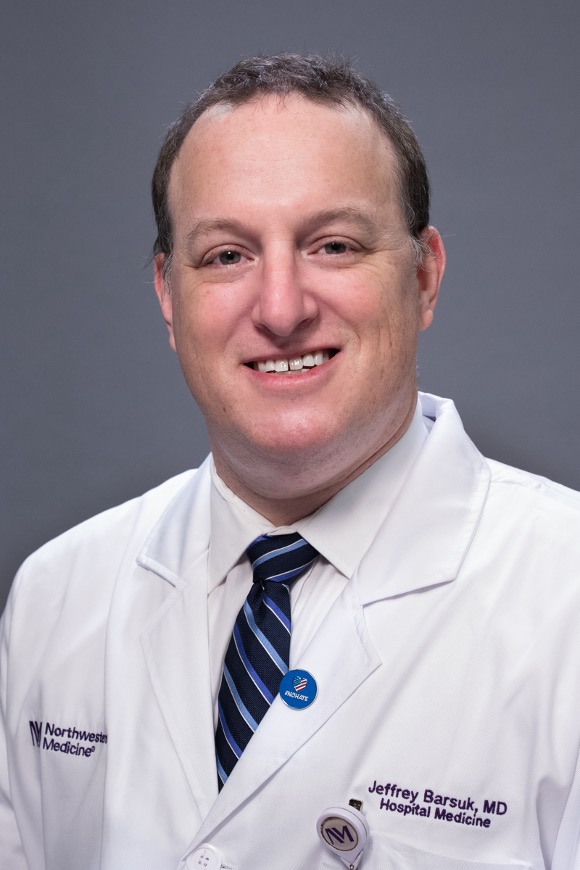
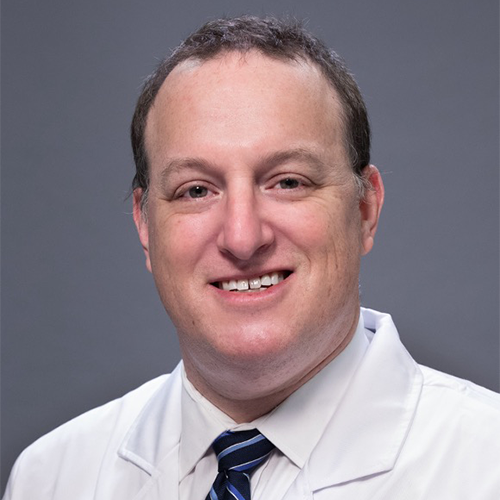
Jeffrey H. Barsuk, ’99 MD, ’02 GME, ’10 MS, executive medical director of Northwestern Simulation, approaches medical training using the same evidence-based techniques professional athletes and musicians use. His goal is to help trainees achieve a high level of mastery before they even touch their first patient.
That’s very different than the high-stakes way Barsuk and many other physicians first learned how to do procedures — often for the first time on a patient. Instead, trainees now receive a baseline assessment, engage in deliberate practice on simulators, and retest until they meet a high enough standard to independently provide safe patient care. Barsuk and his colleagues have published studies demonstrating that this training approach reduces central line infections, pneumothorax and hemothorax, and other post-operative complications.
“We find that it translates to better clinical outcomes,” said Barsuk, who is also the Robert Hirschtick Professor of Medicine at the Feinberg School of Medicine. “Not only that, if you train people using simulation with deliberate practice and mastery learning (simulation-based mastery learning), they retain the skill much better than if you train them using traditional simulation methods.”
Focused on innovation
At Northwestern Simulation, a 35,000-square-foot state-of-the-art facility with realistic inpatient and outpatient rooms, a virtual reality suite, and an innovation lab, Barsuk and his talented team are constantly developing new training techniques for clinicians and clinicians- in -training.
“Simulation has taken off as a modality that the overwhelming majority of residency and medical student programs now use for training,” he said. “It’s often a requirement that you use simulation in some way.”
Northwestern Simulation also provides training for practicing physicians, nurses, and advanced practice providers to become credentialed to perform certain procedures at Northwestern Memorial Hospital or to address safety issues. In addition to improving patient outcomes, this approach can help hospitals reduce costs associated with longer hospital stays resulting from procedural complications.
Simulation has taken off as a modality that the overwhelming majority of residency and medical student programs now use for training.
Jeffrey H. Barsuk, ’99 MD, ’02 GME, ’10 MS
The Innovations Lab at Northwestern Simulation, led by Jafar Arash Mehr, PhD, an engineer and research assistant professor of Medical Education, creates custom training devices for clinical faculty all over the world. Recently, the lab used its 3D printer to create cartridges for an extracorporeal membrane oxygenation machine cannulation for use at a program in Canada. The team is also currently developing a way to use artificial intelligence and computer vision to monitor trainees’ learning on suturing and upper endoscopy skills and provide feedback — a tool they eventually hope to use to evaluate procedural skills in the operating room.
“We do really unique things in the sim center that I think a lot of centers want to emulate,” Barsuk said.
In addition to using the latest technologies, they also help train residents and medical students using actors who serve as standardized patients. The team recently led a mass-casualty incident training at Northwestern Memorial Hospital, with 50 actors playing standardized patients.
The focus of all the work is improving patient care, Barsuk noted. He continues to work as a hospitalist at Northwestern Memorial Hospital, a role he says allows him to work closely with nurses and residents and identify safety challenges that he and his team at Northwestern Simulation can help overcome.
“We do groundbreaking research showing that simulation affects patient outcomes,” he said. “We translate what we do in the simulation lab to actual improvements in patient care in the hospital or the clinic.”
Global reach
Under Barsuk’s leadership, Northwestern Simulation has grown its international reach. He and his colleagues have worked with universities in Osaka and Tokyo and have an ongoing collaboration at a government-run hospital in Recife, Brazil. They also teach a twice-yearly course helping universities around the world adopt the program’s mastery-focused philosophy.
Training curricula developed by Barsuk and his colleagues have also been adopted by hospitals across the U.S. For example, physician educators from Northwestern Simulation trained physician educators at Veterans Health Administration hospitals around the country to use a curriculum they developed for central venous catheter insertions that helps reduce infection and improve patient outcomes.
“We’ve left our legacy, and we have a pretty big impact,” Barsuk said. “What really feels good is knowing that we’ve probably helped thousands, hundreds of thousands — if not millions — of patients by this model.”