Leading With Precision
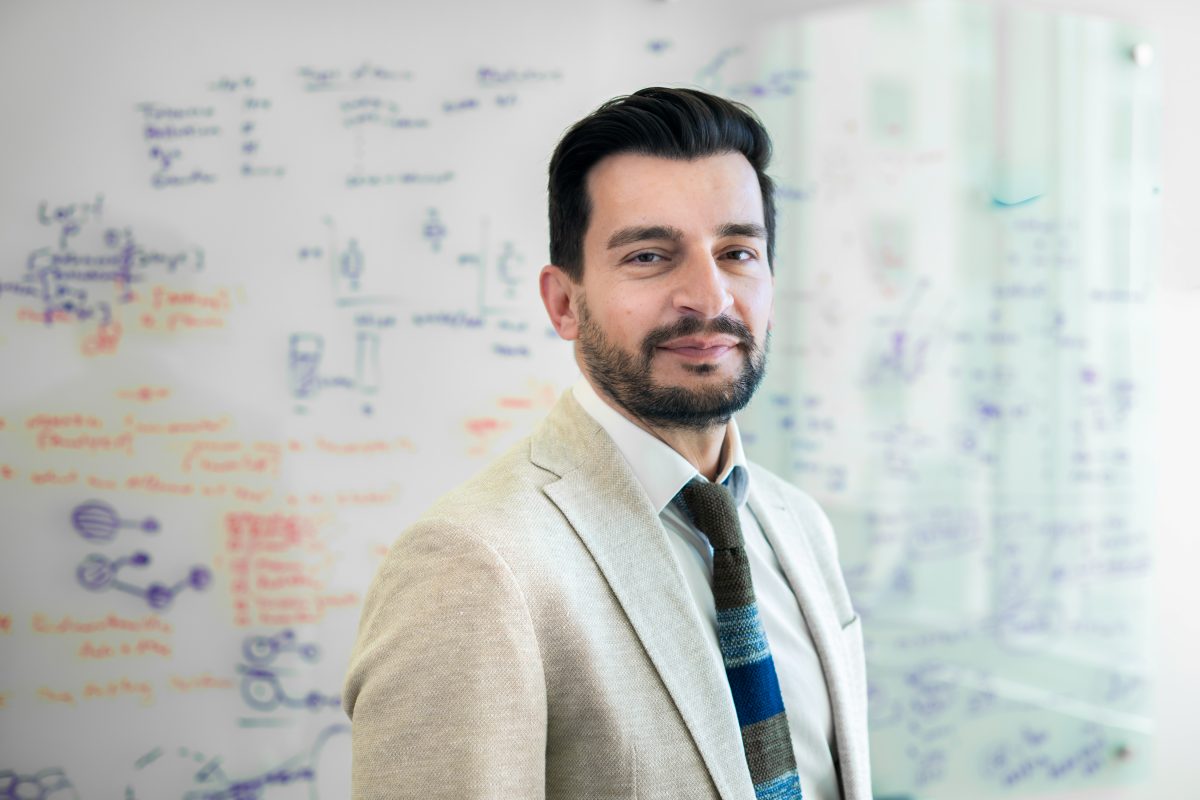
Mohamed Abazeed, MD, PhD, chair of Radiation Oncology, steers the department into the next generation of cancer treatment.
By Amanda Dee | Photography by Gr8y Productions
No looking back
Since his early days of training, Mohamed Abazeed, MD, PhD, has focused on closing the gap between scientific discovery and how patients are actually treated. During his undergraduate studies, he worked as a technician for a breast cancer research program at the University of Michigan. There, he began joining his mentor in the clinic once a month. The experience of going from one floor to discover drugs to another floor to treat patients — sometimes with those very same drugs — set the stage for his career as a physician-scientist.
“What stayed with me was how directly discovery could shape patient care,” he said. “That connection between insight and impact is what I wanted to build my career around.” Today, Abazeed is leading efforts to address some of the most urgent issues in current cancer treatment, from therapy resistance to access to technology.
Abazeed, who is the William N. Brand, MD, Professor of Radiation Oncology, pursued radiation oncology because of its mixture of science, technology, and humanity. After finishing his MD and PhD in biological chemistry, as well as a postdoctoral fellowship in Michigan, he continued his dual pursuit of clinical and research skills as a B. Leonard Holman Fellow at The Broad Institute and Dana Farber Cancer Institute, finishing his residency and fellowship in radiation oncology at Harvard. Before coming to Northwestern in 2020, he began developing a research program at Cleveland Clinic Lerner College of Medicine focused on tumor biology, therapy resistance, and computational approaches to treatment personalization.
Where few or no solutions exist, Abazeed has learned to invent new ones. He has seven patents for radiotherapy technologies and 68 publications to his name. He and his research group have helped identify tumor mutations and cancer cell states that cause resistance to anti-cancer therapies and have developed new technologies and information systems to consistently predict the likelihood of responses to these therapies.
Building on his extensive knowledge across clinical oncology, genetics, cancer genomics, computational biology, machine learning, and biostatistics, Abazeed is now at the forefront of the rapidly advancing world of precision cancer therapy.
“By leveraging the department’s clinical and scientific strengths, we’re optimally positioned to make meaningful contributions to how radiation oncology is practiced,” he said.
Next-generation cancer clinic
As chair, Abazeed is focused on redesigning how cancer care is delivered. “We’re building a vertically integrated platform that brings advanced computation into every part of the clinical workflow,” he explained. This workflow spans tumor delineation, toxicity prediction, and dose selection, as well as the operational infrastructure required to support them.
“It’s no longer just about delivering treatments,” he said. “It’s about understanding how each tumor behaves and adapting treatment accordingly.”
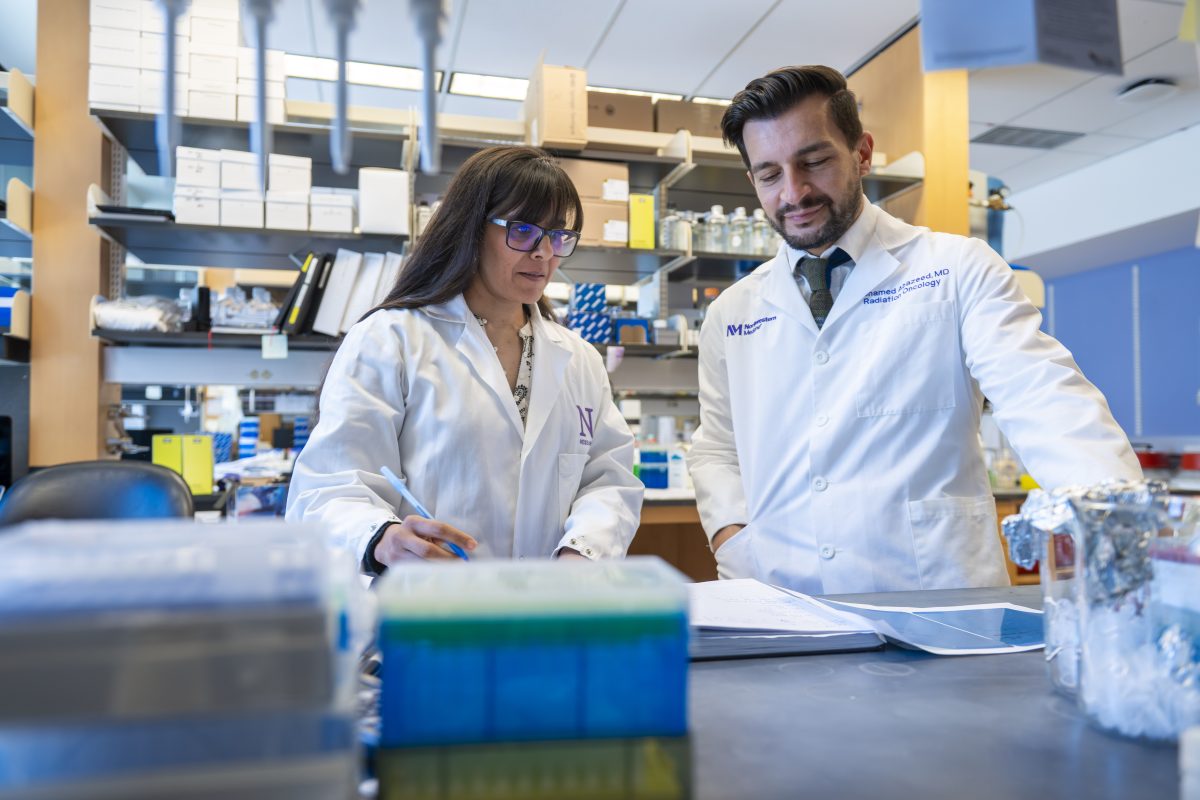
Artificial intelligence (AI) and other technologies have been transforming the field of medicine, with an outsized impact on radiation oncology. While AI integration is happening everywhere from scientific labs to TV streaming services, such technology remains much more regulated in healthcare. However, Abazeed stresses that clinicians, researchers, and institutions must raise the bar to establish appropriate standards for these new tools.
“The limiting step isn’t the model,” he said. “It’s how you validate it, deploy it, and ensure it meaningfully improves care.” At Northwestern, that approach is being tested through prospective clinical studies. One example is iGray, a platform designed to model treatment response and inform individualized radiation dose selection in lung cancer. The study, conducted at the Robert H. Lurie Comprehensive Cancer Center, is one of the first therapeutic AI trials in oncology and among the fastest-accruing trials at the center.
By leveraging the department’s clinical and scientific strengths, we’re optimally positioned to make meaningful contributions to how radiation oncology is practiced.
Mohamed Abazeed, MD, PhD
As co-leader of the lung cancer program, Abazeed’s work is grounded in the realities of treating thoracic malignancies, where tumors shift with respiration and treatment margins are inherently uncertain. By integrating imaging, biology, and computational modeling, his team is developing approaches that enable radiation oncologists to treat tumors more precisely while minimizing exposure to surrounding tissue.
The next-generation cancer clinic, as Abazeed envisions it, is decidedly human — and more personal. And personalized medicine isn’t only about science and technology, he adds. “Personalized care isn’t just about the tumor. It’s about aligning treatment with each patient’s goals, values, and circumstances.”
Bringing it home
As well as personalizing medicine for each patient, Abazeed strives to expand access to the state-of-the-art cancer therapies being developed by his team. To create solutions for a problem as large as treatment access requires the kind of collaboration Abazeed has been practicing throughout his career. Two of the Department of Radiation Oncology’s most important partners are Northwestern Medicine’s cancer service line and the Lurie Cancer Center, which are crucial to scaling technologies and other advances across Northwestern’s statewide footprint and beyond.
“How do we deliver the same level of care, not just in downtown Chicago but across the entire system? That’s the real work,” he said.
The Department of Radiation Oncology is building the infrastructure needed to deploy new technologies and clinical approaches across multiple sites: aligning standards, workflows, and data systems to support consistent, high-quality care. This effort depends on close coordination with computer science, engineering, data science, and enterprise information services, ensuring that computational tools are not only developed, but reliably integrated into clinical practice.
“The advantage of this environment is the ability to connect across disciplines,” Abazeed said. “You have the scientific depth, the clinical scale, and the operational infrastructure to actually implement change.”
Photo credit: Gr8y Productions