
Home / History Blog / Ward Rounds | 1957 | David Y. Hsia, MD
Ward Rounds | 1957 | David Y. Hsia, MD
Pediatrics Pioneer
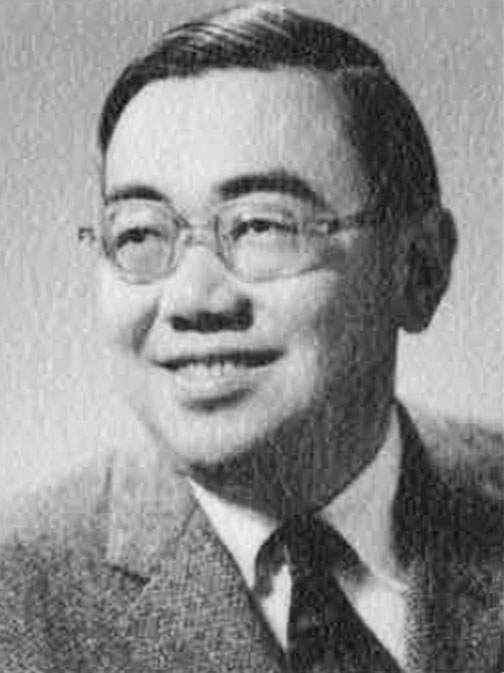
In 1957, David Y. Hsia, MD, joined Northwestern University Medical School as an associate professor of Pediatrics, becoming a full professor in 1960. He then became the director of the Division of Biochemistry and Genetics at Children’s Memorial Hospital (now Ann & Robert H. Lurie Children’s Hospital of Chicago), and for the next 12 years focused his research on the genetic metabolic diseases galactosemia (the inability to metabolize the milk sugar galactose) and phenylketonuria (the inability to break down the animo acid phenylalanine, leading to brain damage and intellectual disability), also known as PKU, both of which affect infants.
Hsia’s work in detecting and treating PKU earned him great acclaim, and in 1965 he received the Society for Pediatric Research E. Mead Johnson Award for his PKU research. In 1970, he received Chicago’s City of Hope award. This prominence led to his inclusion on a team of 25 doctors sent to Vietnam in 1971 by the American Medical Association to help upgrade the Vietnamese medical system. He also lectured in multiple countries in Europe and consulted at the University Children’s Hospital Zurich.
Hsia, the son of a Chinese diplomat and expert in international law, graduated from Harvard Medical School in 1948 and completed an internship at Charity Hospital in New Orleans. He then returned to Harvard to join a team that pioneered the use of gamma globulin — a protein in blood plasma used in the polio vaccine — to prevent the spread of hepatitis. Prior to joining Northwestern, Hsia also trained in biochemistry and genetics at University College London’s Galton Laboratory.
Written by Emma Florio, special collections library assistant at the Galter Health Sciences Library and Learning Center. Learn more and read the full article.